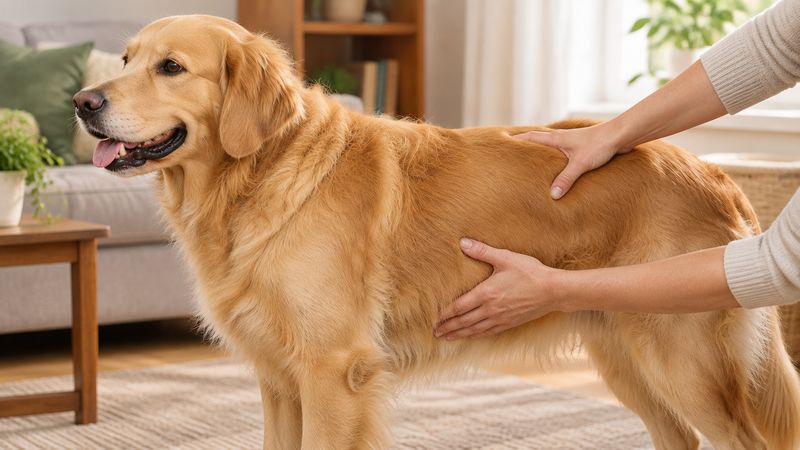
What are the signs of aging in dogs? A checklist for your fridge
Nine changes cover most of what veterinary sources ask owners of older dogs to watch: movement, sleep, weight, thirst, appetite, breath, senses, behavior, and lumps. Put them on one dated sheet where the whole household can see it.
The short version
- Nine items on one page cover the main age-related changes veterinary bodies ask owners to watch.
- Do not assume a change is "just old age." Many causes are manageable once a veterinarian knows about them.
- Date every new observation and write what you saw, not what you think it means.
- The AVMA recommends senior pets see a veterinarian twice a year or more. Bring the sheet.
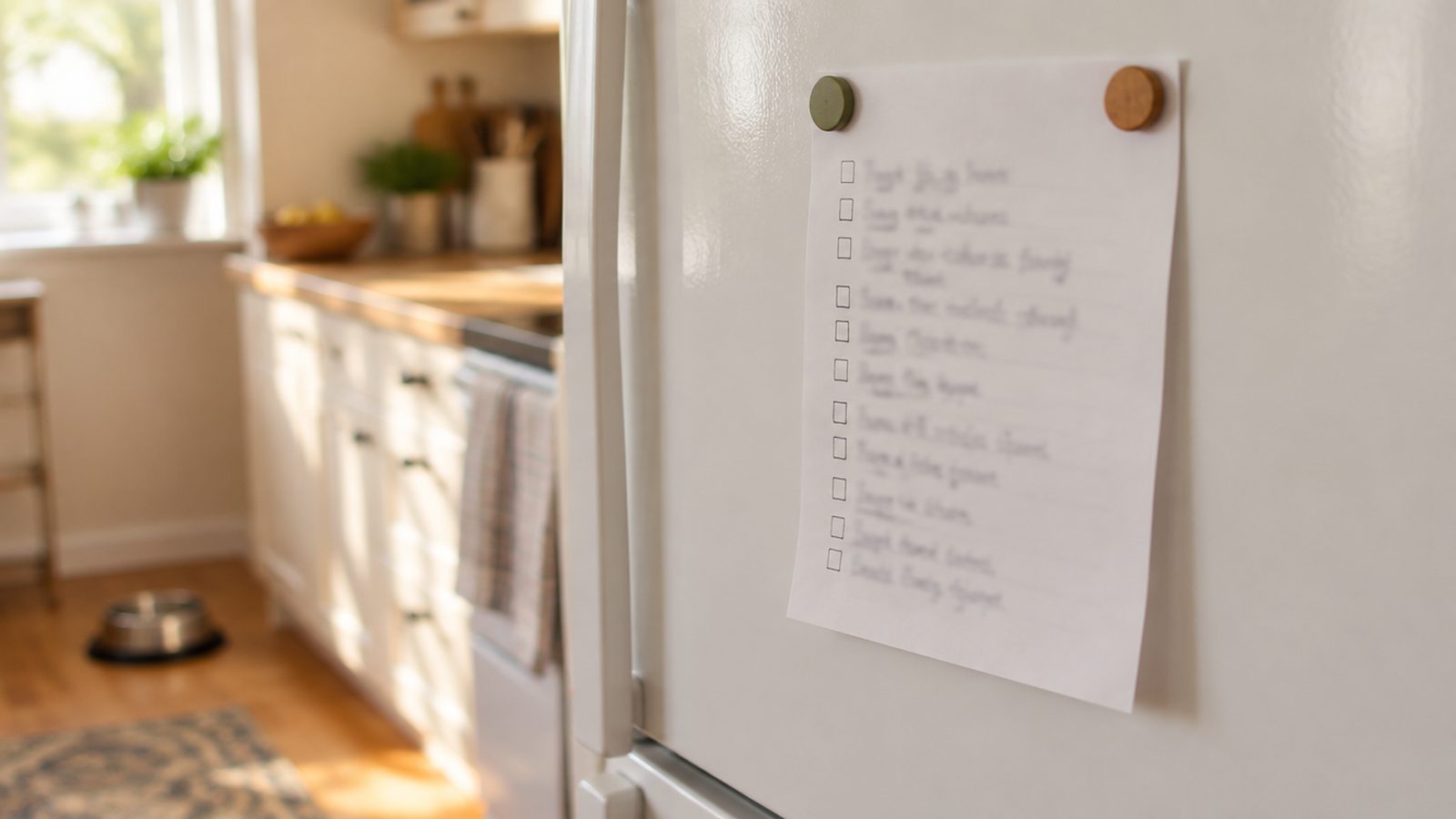
The age-related changes worth tracking in a dog fit on one sheet of paper: movement, sleep, weight, thirst, appetite, breath, senses, behavior, and skin. Write them down, put the sheet on the fridge, and date anything new. Cost: nothing. Time: about ten minutes tonight.
Why write it down instead of keeping it in your head?
Slow changes are hard to see in a dog you look at every day. Each person in the house also sees a different part of the day. One of you sees the morning stiffness, another sees the pacing at 2 a.m.
The American Veterinary Medical Association (AVMA) says behavior changes can be the first signs of aging, and that they may come from pain such as arthritis, from worsening sight or hearing, from certain diseases, or from normal aging.1 You cannot tell which from the couch. A veterinarian with a dated record has a much better chance. The American Animal Hospital Association (AAHA) notes that early signs of cognitive dysfunction may not be recognized by owners at all.3
Is it "just old age"?
That is the one assumption to avoid. AAHA's 2023 senior care guidelines ask veterinary practices to teach owners that aging is not an inevitable physical, mental, and behavioral decline that warrants minimal medical intervention.2
- Osteoarthritis has no cure, but Cornell's Riney Canine Health Center says there are several ways to manage pain and delay its progression, and many dogs live comfortably with treatment.4
- The AVMA recommends senior pets see a veterinarian twice a year or more, so problems are found and treated early.1
- "Senior" starts earlier than many owners expect: around 8 to 11 years for dogs under 20 pounds, 8 to 10 for medium dogs, 8 to 9 for large dogs, and 6 to 7 for giant breeds.1
The nine-item list for the fridge
- Getting up, stairs, and jumping. Stiffness, a changed gait, trouble rising from lying down, or hesitation at stairs and the couch.4
- Sleep. Sleeping more during the day,1 or awake and walking around at night.3
- Weight. Gain or loss without a change in food. The AVMA says sudden weight loss in a senior pet often means something is wrong.1
- Thirst and urination. Filling the water bowl more often, or more trips outside.5
- Appetite and chewing. Eating less, chewing oddly, or dropping food.7
- Breath and teeth. Bad breath, tartar, broken or loose teeth. The AVMA says bad breath may be a sign of dental disease.7
- Hearing and vision. Slower response to voice cues, or seeming confused in familiar places.1
- Behavior. More barking, new anxiety, a change in how the dog greets people or other pets, accidents in the house.13
- Lumps and skin. Any new lump, bump, discolored skin, or sore that does not heal.1
What do the DISHAA letters mean?
Item 8 deserves a closer look. Veterinarians group the behavior signs of canine cognitive dysfunction under the acronym DISHAA:3
- Disorientation
- changes in social Interactions
- changes in Sleep-wake cycles
- loss of House training and other learned behaviors
- altered Activity levels
- increased Anxiety
AAHA's guidelines put age-related cognitive impairment at roughly 14 to 22.5 percent of dogs older than 8 years. They also call cognitive dysfunction a diagnosis of exclusion: the veterinarian first has to rule out pain, organ dysfunction, and other diseases that produce the same behavior.3 So a DISHAA sign on your sheet is a reason for a visit. It is not a diagnosis.
How do you set up the sheet tonight?
- Write the nine items down the left side of one page.
- Add three columns: date first seen, who saw it, what exactly happened.
- Stick it on the fridge with a pen attached.
- Tell everyone who spends time with the dog, including the walker or sitter.
- Write what you saw, not what you think it means. "Stopped halfway up the stairs, Oct 4" is more useful than "seems sore."
- Photograph the sheet before each veterinary visit.
Check tonight
After your dog has been lying down for at least 20 minutes, call them from across the room and watch them get up. Do they rise in one motion, or pause, rock forward, or push up with the front legs first? Write what you see as the first dated line on the sheet. That is your baseline.
When to call your veterinarian
Do not wait for the next routine visit if you see any of these:
- Sudden weight loss.1
- Drinking or urinating more than usual. Cornell advises an appointment, and advises against restricting water beforehand.5
- A lump that is the size of a pea or larger, has been there a month or longer, is growing or changing, or is red, bleeding, or oozing.6
- Abdominal swelling, or bleeding from the mouth, nose, or other body openings.1
What to say: "I first noticed this on [date]. It has happened [number] times since. Here is our list." Then hand over the sheet or the photo.
Quick answers
At what age is a dog considered a senior?
According to the AVMA, small dogs under 20 pounds are considered senior at about 8 to 11 years, medium dogs at 8 to 10, large dogs at 8 to 9, and giant breeds at 6 to 7 years.
What does DISHAA stand for in dogs?
DISHAA is the acronym veterinarians use for signs of canine cognitive dysfunction: Disorientation, changes in social Interactions, Sleep-wake cycle changes, loss of House training, altered Activity, and increased Anxiety. These signs can also come from pain or other diseases, so they call for a veterinary visit.
Is my old dog slowing down just because of age?
Not necessarily. The AVMA says behavior changes in older pets can come from pain such as arthritis, worsening sight or hearing, or disease, as well as normal aging. A veterinarian can sort out which, and many causes can be managed.
Sources
- American Veterinary Medical Association. Caring for senior cats and dogs
- American Animal Hospital Association (2023). 2023 AAHA Senior Care Guidelines for Dogs and Cats: Summary
- American Animal Hospital Association (2023). 2023 AAHA Senior Care Guidelines: Managing Cognitive Dysfunction and Behavioral Anxiety
- Cornell University Riney Canine Health Center. Osteoarthritis
- Cornell University Riney Canine Health Center (2024). Polyuria and polydipsia
- Cornell University Riney Canine Health Center. Skin lumps and bumps
- American Veterinary Medical Association. AVMA: "Doggie breath" could be a sign of serious disease
Written by the Tailwise editorial team from the sources above. We are not veterinarians, and this article is not veterinary advice. If something here matches what you see in your dog, talk to your veterinarian.
More years. Better years.