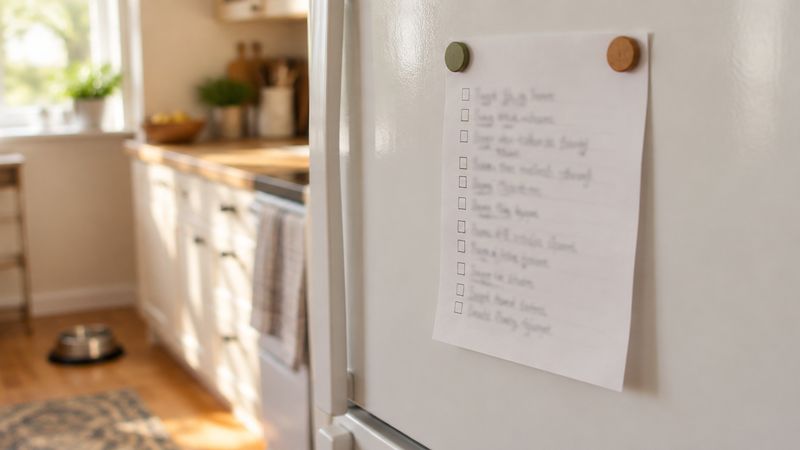
What should you ask your vet? Write the questions before the visit
Write six to twelve questions tonight, and bring dated notes, a phone video, and a full list of everything your dog eats and takes. The appointment is short; preparation is what makes it count.

The short version
- Write your questions before the visit and put the top three first.
- Bring dated notes, weight history, a phone video of the behavior at home, and a full food, treat, and supplement list.
- Tell your veterinarian about every supplement and over-the-counter product. The AVMA says they need to know everything you give.
- For senior dogs, ask about visit frequency, screening bloodwork, pain, muscle loss, and behavior changes.
The questions worth asking your veterinarian are the ones you wrote down before you left the house. Appointments are short, and the dog is usually the most distracting thing in the room. Twenty minutes of preparation tonight costs nothing and changes what you get from the visit.
The AVMA's advice to owners is plain: share your observations and concerns, ask about anything unclear, and "ask until you understand."1
What should you bring to the appointment?
- Dated notes. What you saw, when it started, how often it happens. AAHA says a thorough history covers eating and drinking, exercise, movement, play, eliminations, attitude, grooming, vision, and hearing.3 Run down that list.
- Weight history. Any weights you have, with dates. AAHA's guidelines have the clinic record weight with body and muscle condition scores at every visit, so ask for the trend too.6
- A phone video. AAHA's senior care guidelines call owner videos of the animal moving at home a useful tool for assessing pain and mobility.3 For episodes such as a possible seizure, Cornell says a video recording is especially useful.4
- Everything the dog eats. Brand, product name, and amount for main food, treats, table food, chews, and food used to give pills.5
- Every medication and supplement. How much, how often, and for how long.1
- Medical records, if this clinic does not already have them.1
Why tell the vet about supplements and treats?
Because they count. The AVMA tells owners to always report over-the-counter products and supplements, including vitamins, since some drugs interact with them and the veterinarian "needs to know EVERYTHING you're giving your pet."2
The World Small Animal Veterinary Association's nutrition guidelines ask veterinarians to evaluate treats, table food, supplements, food used for giving medication, and chews along with the main diet.5 The easiest way to get this right is to photograph each label tonight.
Questions for any adult dog
- What body condition score and muscle condition score do you give my dog today? What were they last time?6
- What weight should we aim for, and how much should I feed per day, treats included?
- How do the teeth and gums look? Is a dental cleaning due?7
- Here is everything my dog eats and takes. Is there anything you would change or stop?2
- Would bloodwork now give us a useful baseline to compare against later?
- What should I watch for before the next visit, and what change should make me call sooner?
Extra questions for a senior dog
- How often should we come in now? AAHA's life stage checklist calls for exams at least every six months for senior dogs, and every 6 to 12 months for mature adults.7
- Which screening tests do you recommend this year? AAHA's senior guidelines name a complete blood count, chemistry panel, and urinalysis.3
- Do you find signs of pain or stiffness on the exam? Here is a video of my dog on the stairs.3
- Has my dog lost muscle over the back or hind legs? AAHA notes muscle condition matters for mobility in aging dogs.7
- These are the behavior changes we see at home. Could they come from pain, hearing or vision, or cognitive change? AAHA lists routine evaluation for cognitive changes in senior dogs.7
- What can we change at home, such as floors, stairs, or exercise, to keep my dog comfortable?
How do you use the list in the room?
- Put your top three questions first. If time runs out, those are answered.
- Hand over the food and supplement list at the start, not the end.
- Show the video before the exam. Many dogs move differently in a clinic than at home.
- Write the answers down, or ask whether you may record them.
- Ask for handouts or reputable online sources. The AVMA suggests this too.1
- Before you leave, repeat the plan back: "So we are doing X, and I call you if Y."
Check tonight
Record two phone videos, about 30 seconds each, in normal light. First, your dog getting up after a rest. Second, your dog walking away from you and back across the room. Do not coax or correct. Save both in an album with today's date. If nothing looks wrong, you now have a baseline to compare against next year.
When to call your veterinarian
A question list is for a planned visit. Do not hold something for the list if it is new and worrying. Call the clinic and describe it:
- An episode of collapse, or anything that looked like a seizure. Note when it happened, how long it lasted, and how the dog acted before and after.4
- A sudden change in eating, drinking, or movement.
- Any reaction after starting a new medication or supplement.
What to say: "This started on [date], it has happened [number] times, and I have a video." Then ask, "Should we come in today, or can it wait for the appointment?"
Quick answers
What should I bring to my dog's vet appointment?
Bring dated notes on what you have seen, any weight records, a phone video of the behavior or movement that concerns you, and a list of everything your dog eats and takes, including treats, supplements, and medications with amounts.
Should I tell my vet about supplements I give my dog?
Yes. The AVMA tells owners to always report over-the-counter products and supplements, including vitamins, because some drugs interact with them.
How often should a senior dog go to the vet?
AAHA's canine life stage checklist calls for exams at least every six months for senior dogs, and the AVMA recommends senior pets see a veterinarian twice a year or more. Ask your own veterinarian what interval fits your dog.
Sources
- American Veterinary Medical Association. Ways to make veterinary visits better for everyone
- American Veterinary Medical Association. Your Pet's Medications
- American Animal Hospital Association (2023). 2023 AAHA Senior Care Guidelines: Evaluating the Healthy Senior Pet
- Cornell University Riney Canine Health Center. Idiopathic epilepsy in dogs
- World Small Animal Veterinary Association / Journal of Small Animal Practice (2011). WSAVA Nutritional Assessment Guidelines
- American Animal Hospital Association (2019). 2019 AAHA Canine Life Stage Guidelines: Nutritional Assessment
- American Animal Hospital Association (2019). Canine Life Stage Health Checklists
Written by the Tailwise editorial team from the sources above. We are not veterinarians, and this article is not veterinary advice. If something here matches what you see in your dog, talk to your veterinarian.
More years. Better years.