Why does my dog lick his paws?
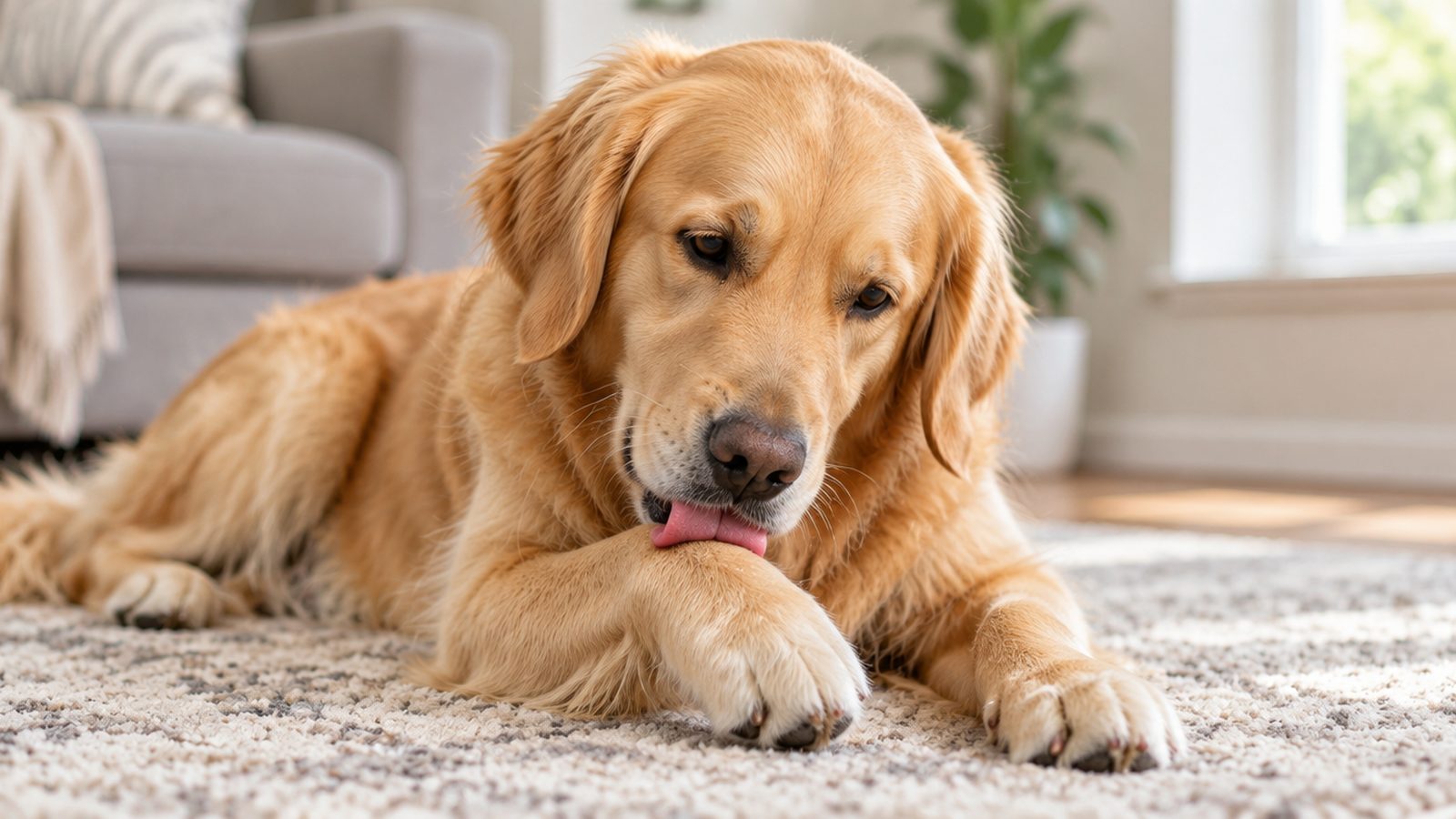
A little paw licking is grooming. Frequent, intense licking usually means the paw itches or hurts, most often from allergies, something lodged, an injury, infection or pain, and it is worth a call to your veterinarian.
The short version
- Occasional licking after a walk is normal grooming. Frequent, intense licking is not.
- Itch is the most common cause; injury, infection, pain and boredom or anxiety are the others.
- Licking damages skin and lets bacteria and yeast in, which causes more licking.
- Limping, swelling, a bump between the toes or broken skin are reasons to call the veterinarian.
Dogs lick their paws to clean them, and a little of that is normal. Frequent, intense licking is different: it usually means the paw itches or hurts, and the common causes are allergies, something stuck between the toes, an injury, a skin infection, pain, or boredom and anxiety.
How much paw licking is normal?
Occasional licking is part of self-grooming, especially after a walk on dirty or sandy ground. The American Kennel Club's chief veterinarian draws the line at frequency and intensity: if a dog licks its paws often and hard, something is likely wrong.1
A practical way to sort it:
| Probably grooming | Worth investigating |
|---|---|
| Short, after a walk or a meal | Repeated through the day, or long sessions |
| All paws, casually | One paw or one spot, again and again |
| Stops easily when you call | Goes straight back to it |
| Skin and fur look the same as always | Redness, swelling, broken skin or limping |
What causes persistent paw licking?
VCA Animal Hospitals groups the causes into three: itchiness, which is the most common, injury, and behavioral issues.2 In more detail:
- Itch from allergies or parasites. The two common causes of itchiness are parasites such as fleas and allergies, which can be to airborne allergens, food ingredients or something the skin touches.2 The Merck Veterinary Manual names parasites, infections and allergies as the most common causes of itching in dogs.3
- Something lodged or an injury. A cut, a torn nail, a growth, or a stone, thorn or ice ball stuck between the pads.1 In areas with foxtail grass, the barbed seeds can pierce the skin between the toes. Once in, a foxtail cannot back out on its own, and excessive licking of one spot can be the sign.4
- Skin infection. Painful bumps between the toes, which Merck describes as reddish purple and shiny, are most often caused by a deep bacterial infection. Dogs lick and bite at them and often go lame. Breeds with short bristly hair on the toe webbing, such as Labrador Retrievers, English Bulldogs and Chinese Shar-Peis, are predisposed.5
- Pain. A dog may lick over a sore area, including pain from arthritis.1 VCA lists joint pain among the physical causes of lick granuloma, a sore created by obsessive licking of one spot on the lower leg, typically over the wrist of a front leg.6
- Boredom, anxiety or compulsion. Listed by both the AKC and VCA, usually considered after physical causes have been checked.16
Why does licking make the problem worse?
Because it feeds itself. Constant licking keeps the skin wet and damaged, and bacteria or yeast can move into broken skin. That causes more itching, redness and swelling, and so more licking.12 Merck notes that excessive licking of the feet is common in dogs that have yeast and bacterial infections on top of the original itch.3
What should you look at between the toes?
Good light and a calm dog are all you need. The AKC advises looking closely at the nails, between the toes and pads, and at the tops of the feet.1 You are looking, not treating.
- Spread the toes gently and look at the webbing on top and underneath.
- Check each nail and the skin around it.
- Look for a cut, a torn nail, a lump, redness, swelling, or anything stuck.
- Compare with the same paw on the other side.
If your dog pulls the paw away, tenses or turns its head toward your hand, stop. That reaction is information for the veterinarian. Do not dig for something you can see only partly, and do not try to open a bump.
Check tonight
Pick 30 minutes this evening when your dog is settled and you are in the same room. Count the paw-licking bouts and note which paw each time. Then spend one minute looking between the toes of that paw in good light and compare it with the opposite paw. Write down the count, the paw, and what you saw.
When to call your veterinarian
Call if the licking is frequent or intense, or if you see any of these:
- limping, or holding the paw up;
- redness, swelling, a bump between the toes, broken skin or discharge;
- something lodged that does not come away easily, or a walk through foxtail grass followed by licking at one spot;4
- a raw or thickened patch on the lower leg that the dog keeps returning to.6
Tell them which paw, how often, when it started, whether it is seasonal, and anything that changed recently, such as food, walking routes or cleaning products. Ask what they think the underlying cause is, not only how to stop the licking. Finding the cause follows a sequence: a skin history and exam, then ruling out parasites, then infection.3 VCA's advice is simply to contact your veterinarian so they can determine the cause and build a plan.2
Could it just be boredom?
It could, and long hours alone with little to do are a fair thing to look at. But a behavioral cause is hard to confirm at home, and the physical causes are common and can look the same from the outside. Even lick granulomas involve both physical and psychological factors, and VCA notes most dogs need both sides addressed.6 Start with the paw and the veterinarian. If the skin and joints check out, more exercise, food puzzles and company are the reasonable next step.
Quick answers
Is it normal for a dog to lick its paws every day?
Brief licking as part of grooming, especially after walks, is normal. Frequent, intense licking, or licking focused on one paw, usually points to itch, injury, infection or pain and should be checked by a veterinarian.
Why does my dog lick one paw constantly?
Licking focused on one paw suggests a local problem such as a cut, a torn nail, something lodged between the toes, a skin infection or pain in that leg. Look between the toes in good light and call your veterinarian if you see redness, swelling or limping.
Can allergies make a dog lick its paws?
Yes. Veterinary sources name itch as the most common cause of paw licking, and allergies to airborne allergens, food ingredients or contact substances are among the common causes of itch, along with parasites.
Sources
- American Kennel Club (2026). Why Does My Dog Lick Their Paws? (Dr. Jerry Klein, Chief Veterinarian)
- VCA Animal Hospitals. Why Is My Dog Licking & Biting Their Paws?
- Merck Veterinary Manual, Dog Owners edition (2025). Itching (Pruritus) in Dogs (Moriello)
- UC Davis School of Veterinary Medicine. Foxtails and Dogs
- Merck Veterinary Manual (2024). Interdigital Furunculosis in Dogs
- VCA Animal Hospitals. Lick Granuloma in Dogs
Written by the Tailwise editorial team from the sources above. We are not veterinarians, and this article is not veterinary advice. If something here matches what you see in your dog, talk to your veterinarian.
Better days ahead.