What can you do when a dog won't take a pill or supplement?
Change the delivery instead of adding force: a safe food wrapper, a plain-treat sequence, or a different format. If the refused item is a prescribed medication, ask your veterinarian about another form before you crush, split or skip anything.
The short version
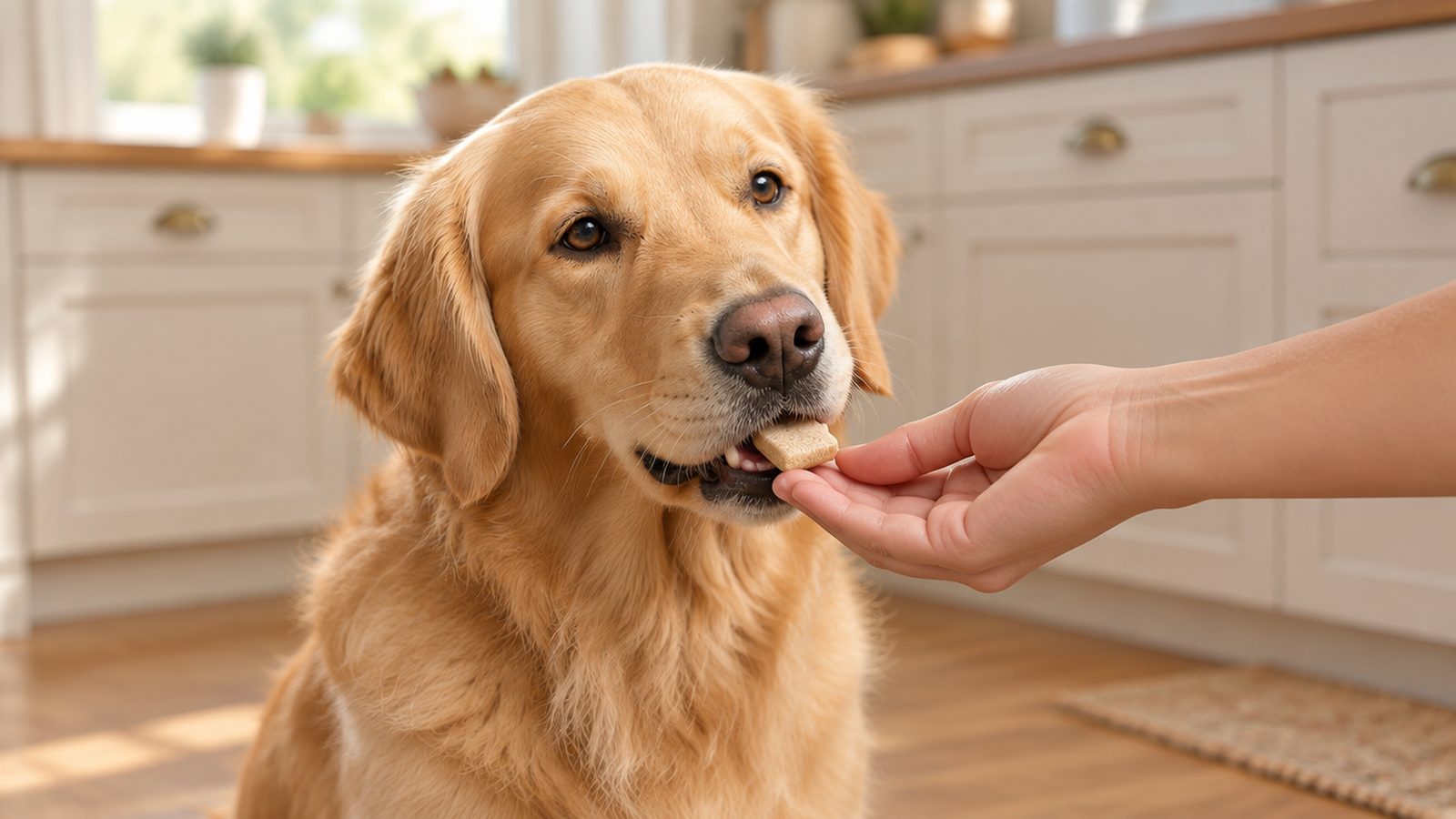
- Hand-feed the hidden pill between plain treats and watch until it is swallowed; some dogs chew the treat and spit out the pill.
- Check the wrapper food: some peanut butters contain xylitol, and grapes, raisins and onions are on WSAVA's avoid list.
- Do not crush, split or open a medication without your veterinarian's instruction; ask about a liquid, flavored or compounded form instead.
- Chews and pill wrappers count toward the under-10% treat calorie limit, and palatable chews should be stored locked away.
When a dog won't take a pill or supplement, the usual fix is to change the delivery, not to use more force: a different food wrapper, a different order of treats, or a different format. For a prescribed medication, the next step is a call to the veterinarian, who can often offer another form.
Why does the daily routine matter more than the trick?
Anything meant to be given every day only does its job if it actually gets into the dog every day. The goal is not to win one evening. It is to find a way your dog accepts calmly, that you can repeat for months without a struggle.
What do veterinary sources say about hiding a tablet in food?
VCA Animal Hospitals suggests a small amount of canned dog food or a soft treat that can be molded around the pill, such as a pill pocket.1 Cornell's Riney Canine Health Center adds cheese, deli turkey and cooked sweet potato.2
The known pitfalls:
- Dogs eat around it. Cornell notes that some dogs chew the treat and then spit out the pill.2 VCA advises hand-feeding the medicated piece and watching until it is swallowed.1
- The dog learns the pattern. Cornell describes a sequence: a plain treat, then the treat with the pill, then another plain treat right away2
- Not every medication goes with food. MSPCA-Angell advises hiding medication in food only if your veterinarian allows it, because some drugs must be given on an empty stomach.3
If your dog becomes anxious or fearful about being given a pill, VCA's advice is to contact your veterinarian instead of pushing on.1
Check tonight
Offer one plain piece of your dog's usual treat from an open, flat hand, with nothing hidden in it. Watch for five seconds. Does your dog take it at once, sniff and hesitate, or turn away? That is your baseline for how to offer anything new.
Which foods should never be used as a wrapper?
Peanut butter appears on most lists of pill-hiding foods.12 Read the label first. The FDA warns that some peanut and nut butters contain xylitol, a sweetener that in dogs can trigger a strong release of insulin and a sudden drop in blood sugar. It may also be listed as birch sugar or wood sugar.4
The World Small Animal Veterinary Association's treat guide also lists grapes, raisins, onions, garlic, chocolate and macadamia nuts among foods to avoid.5 If your dog is on a restricted diet for a health condition, Cornell advises checking the wrapper food with your veterinarian first.2
Can you crush or split a tablet?
Not without asking. MSPCA-Angell's guidance is direct: do not crush, dissolve, or open the capsule of any medication without specific permission or instruction from your veterinarian.3
There is a proper route to a different form. The AVMA explains that compounding, which includes adding flavoring to a drug or making an oral liquid from tablets, should be done only on a licensed veterinarian's prescription for a specific patient. Compounded preparations are not FDA-approved, so this is your veterinarian's decision, not a home workaround.7
When to call your veterinarian
- Your dog refuses a prescribed medication. Say: "He won't take the tablet in food or by hand. Is there a liquid, a flavored chew, or a compounded version, and can this drug be given with food?"
- Your dog suddenly refuses food or treats it normally takes.
- Your dog eats a large amount of any supplement or medication. Call your veterinarian or an animal poison control center right away, with the container in hand.
Which supplement format is easiest to keep up?
No format is best for every dog. The trade-offs are practical.
| Format | How it is given | What to weigh |
|---|---|---|
| Tablet or capsule | Hidden in food or placed by hand | Adds no flavor of its own; needs a wrapper or handling every day |
| Powder | Mixed into a meal | Easy to adjust; the dog must finish the bowl to get the full amount |
| Liquid | On food or by syringe | Easy to measure; can be messy, and some dogs dislike the syringe |
| Soft chew | From the hand, like a treat | No wrapper needed; adds calories and must be stored securely |
Three things apply to every format:
- Palatability is individual. A flavor one dog takes eagerly, another refuses. Start with the smallest container before buying a large one.
- It counts toward calories. WSAVA says treats should make up less than 10% of a dog's daily calories, and it counts chews, supplements and foods used to give medication as treats.5
- Tasty means lock it away. The ASPCA Animal Poison Control Center reports that veterinary products made up 9.1% of its exposure cases in 2025, many involving flavored chewable tablets or soft chews such as joint and calming products. These forms are easy to give but greatly increase the risk that a pet eats the whole container, so it advises keeping them locked away.6
What we did with Tailwise
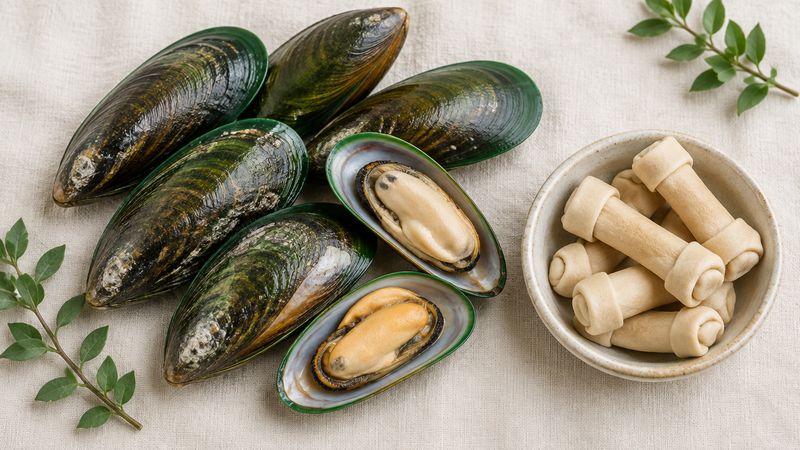
Tailwise Hip & Joint is a chicken-flavor soft chew made to be taken from the hand like a treat. It contains shellfish (green lipped mussel). It is a supplement, not a treat, so keep the jar closed and out of reach and stay within the amount on the label.
Quick answers
Can I crush my dog's pill and mix it into food?
Not without asking first. MSPCA-Angell advises never crushing, dissolving or opening a capsule without specific instruction from your veterinarian, and some medications must be given on an empty stomach.
Is peanut butter safe for hiding a dog's pill?
Only if the label shows no xylitol, which may also be listed as birch sugar or wood sugar. The FDA warns that some peanut and nut butters contain it and that it can cause a dangerous drop in a dog's blood sugar.
What should I do if my dog ate a whole jar of supplement chews?
Call your veterinarian or an animal poison control center right away and have the container with you. The ASPCA Animal Poison Control Center notes that flavored soft chews raise the risk of a pet eating the whole container and should be kept locked away.
Sources
- VCA Animal Hospitals. Giving Pills to Dogs
- Cornell University College of Veterinary Medicine, Riney Canine Health Center. How to medicate your dog
- MSPCA-Angell. The Dos and Don'ts of Pets Medications
- U.S. Food and Drug Administration. Paws Off Xylitol; It's Dangerous for Dogs
- World Small Animal Veterinary Association (WSAVA) Global Nutrition Committee (2024). Feeding treats to your dog
- ASPCA Animal Poison Control Center (2026). The Top 10 Toxins of 2025
- American Veterinary Medical Association. Compounding FAQ for pet owners
Written by the Tailwise editorial team from the sources above. We are not veterinarians, and this article is not veterinary advice. If something here matches what you see in your dog, talk to your veterinarian.
Better days ahead.