
My dog is limping: when is it a vet visit today?
Same day if your dog will not bear weight, cannot move the leg, or is in obvious pain, or if the limp is sudden, severe, or worsening. Veterinary sources say a mild limp that lasts more than 24 hours also needs a visit.
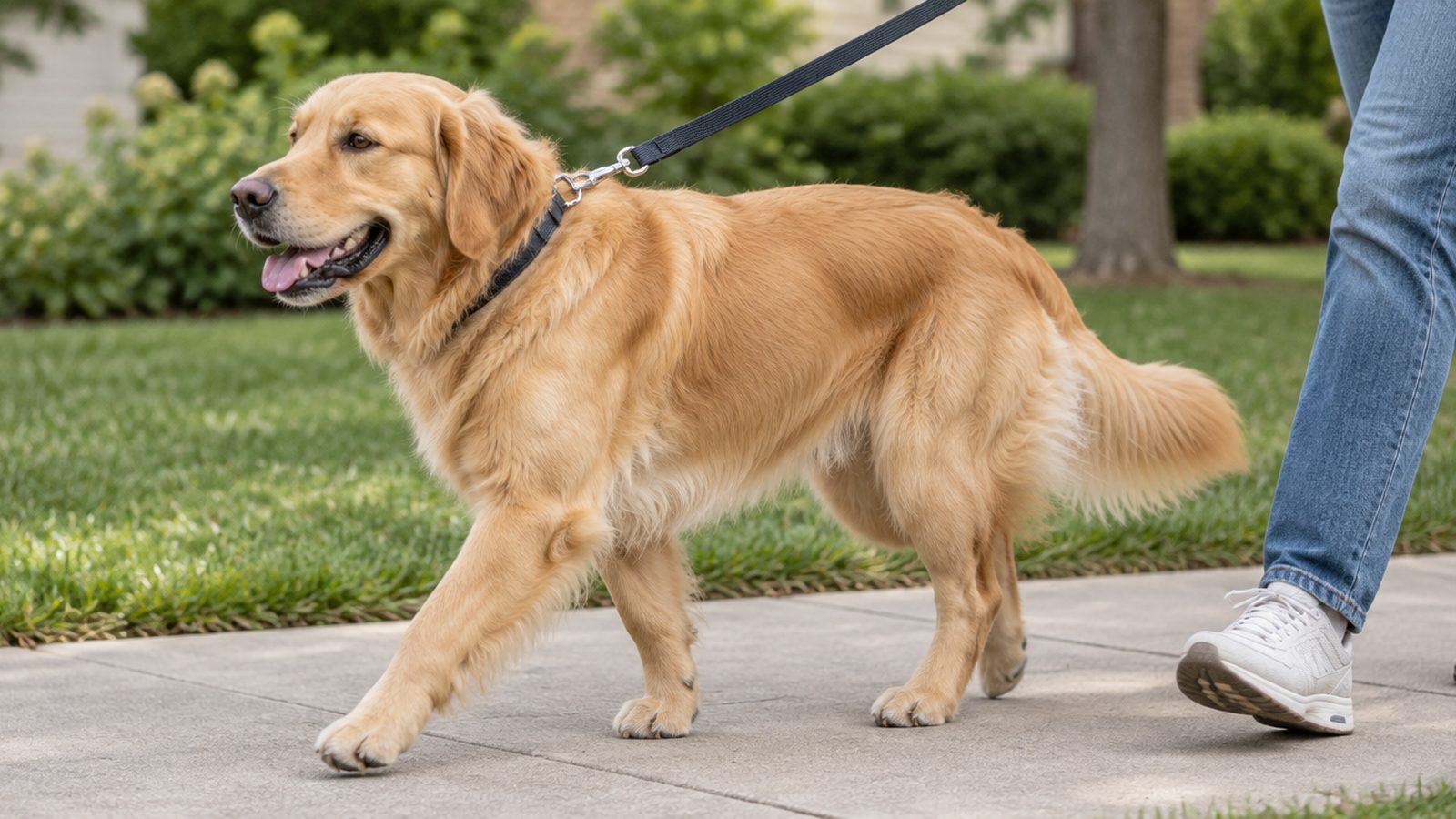
The short version
- AVMA lists fractures, severe lameness, and inability to move a leg as needing immediate veterinary care.
- Cornell says not to wait if the pain is severe, sudden, or worsening, or if the limp has lasted more than a day or two.
- For a mild limp, VCA says to restrict activity and seek veterinary care if it persists beyond 24 hours.
- Note which leg and when it started, take a short video, and do not give human pain relievers.
A limp needs a veterinarian the same day if your dog will not put weight on the leg, cannot move it, or is in obvious pain. For a mild limp, veterinary sources give a short window of rest and observation, about 24 hours and no more than a day or two. We are not veterinarians. What follows is a report of what veterinary sources say, plus what to note down for yours.
Which limps need a vet today?
The American Veterinary Medical Association (AVMA) lists "fractured bones, severe lameness or inability to move leg(s)" among the emergencies that require immediate veterinary consultation or care. "Obvious signs of pain" is on the same list.4
Cornell University's Riney Canine Health Center adds two more triggers. If the pain is "severe, sudden or worsening, don't wait."3
VCA Animal Hospitals notes that most dogs will not walk on a broken leg, a torn ligament, or a dislocated joint. It adds a handling rule: if your dog is in severe pain, do not attempt to examine it.2
| What you see | What veterinary sources say |
|---|---|
| Leg held up, cannot move the leg, suspected fracture, or obvious pain | Immediate veterinary consultation or care4 |
| Limp that is severe, came on suddenly, or is getting worse | Do not wait3 |
| Mild limp, dog otherwise acting normally | Restrict activity. Seek veterinary care if it lasts more than 24 hours2 |
Is it ever reasonable to wait and watch?
Briefly, according to the sources. VCA says: "If lameness persists for more than 24 hours, seek veterinary care."2 Cornell's threshold is a limp lasting "more than a day or two."3 Neither source describes a longer watch period.
During that window, the sources describe one thing to do: rest. VCA's wording is to confine lame dogs and restrict their activity.2
Does it matter whether the limp was sudden or gradual?
It matters to your veterinarian. Both VCA and Cornell list how the limp started among the first things you will be asked.23
The story can be more complicated than it looks. The Merck Veterinary Manual describes lameness as "a sign of illness, not a specific disease."1 The American College of Veterinary Surgeons (ACVS) gives an example. Rupture of the cranial cruciate ligament in the knee is one of the most common reasons for hind limb lameness in dogs. ACVS says it usually results from slow degeneration over time rather than a sudden injury to a healthy ligament, which it calls very rare.5 So a limp that seems to appear overnight can have a longer history behind it.
ACVS also notes that this kind of lameness varies in severity and is sometimes seen only after long periods of rest, and that the persistence of a lameness is itself a sign of pain, even when a dog is not crying out.5 A limp that comes and goes is still worth reporting.
What should you note down before the appointment?
Cornell lists the questions veterinarians ask about a limping dog.3 VCA suggests watching the dog walk to identify the leg and how it is used.2 Have these ready:
- Which leg: left or right, front or rear
- How the leg is used: held off the ground, touched down lightly, or shorter steps than usual
- When it started, and whether it was sudden or gradual
- Whether it is improving, worsening, or shifting between legs
- Trouble with stairs, jumping, getting up, or exercise
- Any recent activity, fall, or change in routine
- Any medication your dog has had
Video helps. Cornell says home videos showing the limp are "extremely helpful" and notes that some dogs move normally once they reach the clinic because of excitement or adrenaline.3
Check tonight
Film your dog walking on a leash on a flat surface for about 30 seconds: once walking away from you, once toward you, and once from the side. Keep the pace slow and the whole dog in frame. Do not ask a limping dog to trot, climb stairs, or jump for the camera. Save the clip with today's date.
What will the veterinarian do?
According to the Merck Veterinary Manual, a lameness examination includes watching the dog rest, get up, and walk, and checking whether one limb or several are affected. The veterinarian then feels bones, joints, and soft tissue for swelling, pain, instability, and reduced range of motion. X-rays or ultrasound may follow, and less often CT or MRI.1
What should you not give a limping dog?
Do not give a human pain reliever. The U.S. Food and Drug Administration (FDA) says a pain reliever meant for people may not be safe in dogs because the drug may last longer, be absorbed faster, and reach higher blood levels. Its advice is not to give your pet any medication until you have talked to your veterinarian.6
When to call your veterinarian
Call right away if your dog will not bear weight, cannot move a leg, or is in obvious pain.4 Call the same day if the limp is sudden, severe, or getting worse.3 Book a visit if a mild limp is still there after 24 hours.2 When you call, say:
- Which leg, and whether your dog is putting weight on it
- When it started and what your dog was doing
- That you have video
Then ask: "How soon should we come in, and how should I keep my dog rested until then?"
Quick answers
How long should I wait before taking a limping dog to the vet?
VCA Animal Hospitals says to seek veterinary care if lameness persists for more than 24 hours, and Cornell says not to wait if a limp has lasted more than a day or two. If the limp is severe, sudden, or worsening, veterinary sources say to go sooner.
Is a dog limping an emergency?
It can be. The AVMA lists fractured bones, severe lameness, inability to move a leg, and obvious signs of pain among the emergencies that require immediate veterinary consultation or care.
Can I give my limping dog ibuprofen or aspirin?
No. The FDA says pain relievers meant for people may not be safe in dogs and advises not giving a pet any medication until you have talked to your veterinarian.
Sources
- Merck Veterinary Manual (Dog Owners). Lameness in Dogs
- VCA Animal Hospitals. First Aid for Limping Dogs
- Cornell University College of Veterinary Medicine, Riney Canine Health Center. What to expect when taking your limping dog to the veterinarian
- American Veterinary Medical Association. 13 Animal Emergencies That Require Immediate Veterinary Consultation and/or Care
- American College of Veterinary Surgeons. Cranial Cruciate Ligament Disease
- U.S. Food and Drug Administration. Get the Facts about Pain Relievers for Pets
Written by the Tailwise editorial team from the sources above. We are not veterinarians, and this article is not veterinary advice. If something here matches what you see in your dog, talk to your veterinarian.
More years. Better years.